
Some of the links on this page may be affiliate links. As an Amazon associate, I earn from qualifying purchases. There is no additional cost to you when you make a qualifying purchase via an affiliate link. Click here for the full affiliate disclosure.
From 1903 to Today: Inside the Factory, the History, and the Fun of Crayola Crayons
When people think of crayons, they think of Crayola. That bright yellow box has been a classroom and household staple for more than a century, sparking creativity for generations. For many of us, Crayola crayons are as much a part of growing up as playground swings and school lunches. And here’s the best part: every single crayon is still proudly made in Easton, Pennsylvania, where they’ve been rolling off the line since 1903.
Crayola crayons are made in the USA at the company’s Easton, Pennsylvania factory, where more than 12 million crayons are produced every single day.
✅ On this page you’ll find:
- The invention and history of Crayola crayons, from 1903 to today
- A look inside the Easton, PA factory where crayons are still American-made
- Crayola’s explosion of colors, famous box sizes, and collector editions
- How Crayola became a staple in every American classroom
- Crayola fun facts and the brand’s place in pop culture and American History
- An introduction to the Crayola Experience family attraction
- Sustainability efforts and community outreach
- A mega FAQ answering common Crayola crayon questions
- Just for fun, I made you a free printable coloring page!
🖍️ Perfect for:
- Collectors and nostalgic fans of Crayola history
- Families planning a visit to The Crayola Experience
- Parents looking for safe, non-toxic art supplies
- Teachers stocking classrooms with American-made School Supplies
- Kids learning about pop culture, history, trademarks, & copyrights
From their invention in 1903 to their place in the Smithsonian, Crayola crayons have been coloring America’s story for more than 120 years. In this ultimate guide, we’ll explore their history, their Made in USA manufacturing, their explosion of colors, and why they remain one of the most iconic American products of all time.
The Invention of Crayola Crayons
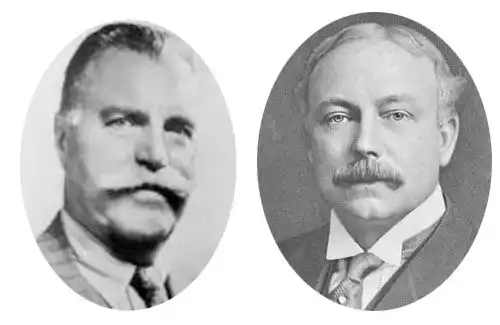
The story of Crayola crayons begins with two cousins, Edwin Binney and C. Harold Smith, who founded Binney & Smith in the late 1800s. At first, their business had nothing to do with children’s art. They supplied pigments for industrial products like red iron oxide for barns and black carbon for tires.
By the early 1900s, schools were looking for affordable, safe drawing materials for children. Chalk was messy, and imported wax crayons were expensive. Binney & Smith saw an opportunity.
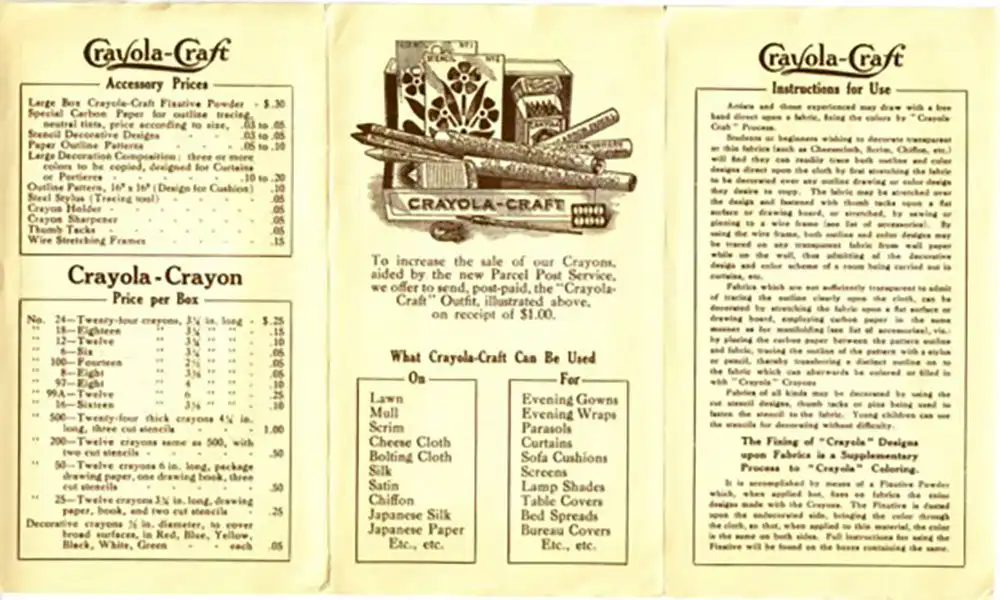
In 1903, they introduced a box of 8 wax crayons priced at just a nickel. That first box included black, brown, blue, red, purple, orange, yellow, and green, the foundation of what would become the Crayola empire.
The name “Crayola” came from Alice Binney, Edwin’s wife, who blended the French word craie (chalk) with “ola” (oily). Simple, catchy, and instantly recognizable, the name stuck. More than 120 years later, children still ask for Crayola crayons by name.
⭐️ First Crayola Facts
- Founded by Binney & Smith in the 1890s
- Early business: pigments for barns and tires
- First 8-pack introduced in 1903 for 5 cents
- Name = craie (chalk) + “ola” (oily)
What started as an industrial pigment company quickly turned into one of the most beloved childhood brands in America. The first 8-pack of Crayola crayons in 1903 laid the foundation for a legacy of color, creativity, and American-made pride that continues to this day.
✅ Fun Fact: Ever wonder why barns are red? Farmers used red iron oxide pigment because it was cheap, plentiful, and effective. The mineral not only gave barns their iconic red color but also helped protect the wood from mold and decay. Binney & Smith supplied that pigment long before they made crayons.
Big Moments in Crayola History
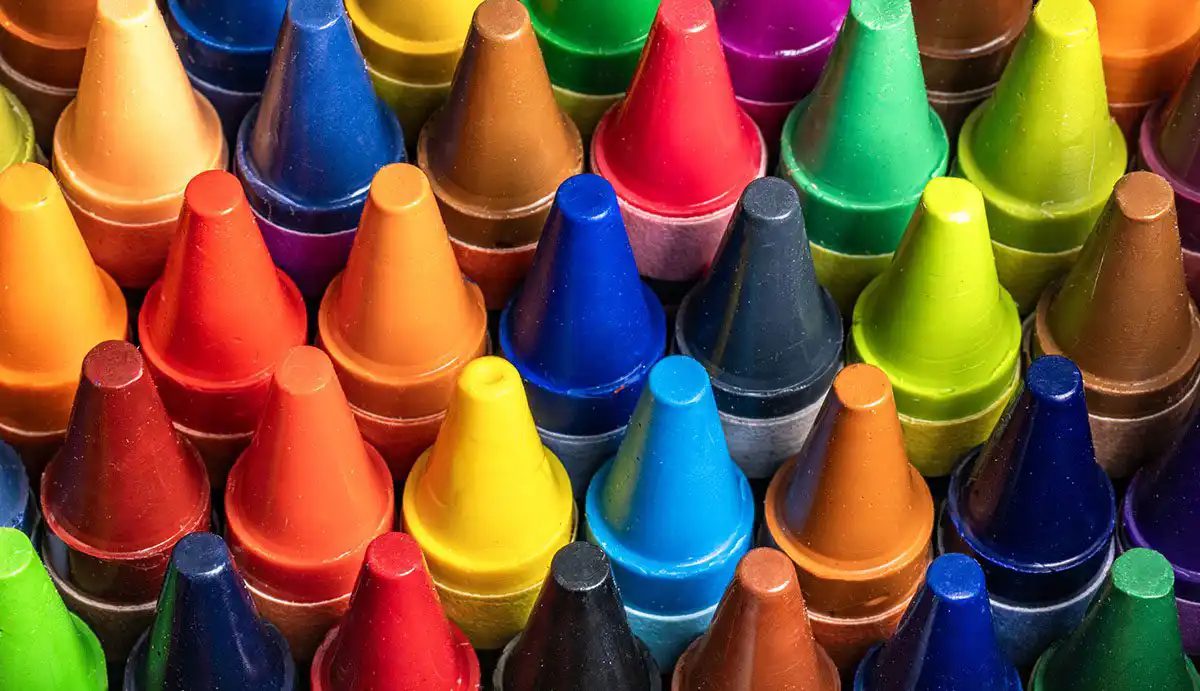
After the first box of 8 crayons in 1903, Crayola didn’t slow down.
The brand quickly became a household name as teachers slipped Crayola boxes into desks and children filled their first coloring pages with bold, waxy lines. Classrooms across America smelled faintly of crayons, and the yellow-and-green box became as familiar as chalkboards and cursive handwriting.
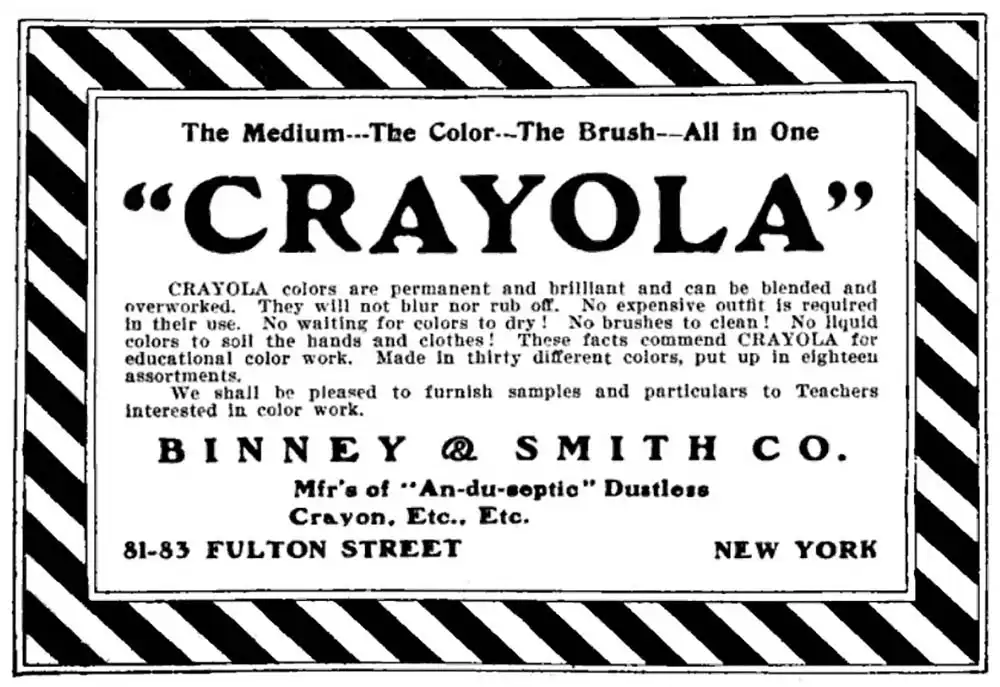
In 1904, just a year after launch, Binney & Smith earned a gold medal at the St. Louis World’s Fair for their pigments and crayons. That medal symbol appeared on Crayola packaging for decades and reinforced the young brand’s reputation for quality.
Crayola’s Explosion of Colors
By the 1920s and 30s, Crayola had already expanded its lineup, adding new shades and bigger boxes to keep up with the demand for color.
One of the biggest moments came in 1958, when Crayola introduced the 64-crayon box with a built-in sharpener. This was the ultimate treasure chest of color, and it cemented Crayola’s place as a cultural icon.
Over the decades, new innovations followed: fluorescent crayons in the 1970s, metallic and glitter crayons in the 1990s, and more recently, the “Colors of the World” skin tone set that promotes inclusivity.
Fans have even shaped the palette themselves. In 1993, kids helped name colors like Macaroni & Cheese and Robin’s Egg Blue, and later contests such as “Name the New Blue” kept the tradition alive.
Crayola has also retired colors over the years, sparking both nostalgia and collector buzz. Shades like maize, lemon yellow, blue gray, raw umber, and dandelion were phased out, replaced by fresh new hues to keep the palette modern.
Personal fun fact: Dandelion was one of my favorite Crayola colors as a child. It was a deep yellow shade that showed up on coloring books.
⭐️ Crayola Timeline of Colors Highlights
- 1903 – First 8-pack of crayons
- 1904 – Gold medal at the St. Louis World’s Fair
- 1920s–30s – Crayola expands into schools nationwide
- 1958 – 64-crayon box with sharpener introduced
- 1970s – First fluorescent crayons released
- 1990s – Glitter and metallic crayons launched
- 1993 – Kids vote to name new colors like Macaroni & Cheese
- 2017 – Retirement of dandelion, introduction of new shades
- 2020s – Colors of the World skin tone crayons
From instant classics to long-lost favorites, Crayola’s colors tell a story of culture, creativity, and change. Every crayon in the box carries a memory, and every new color keeps the rainbow growing.
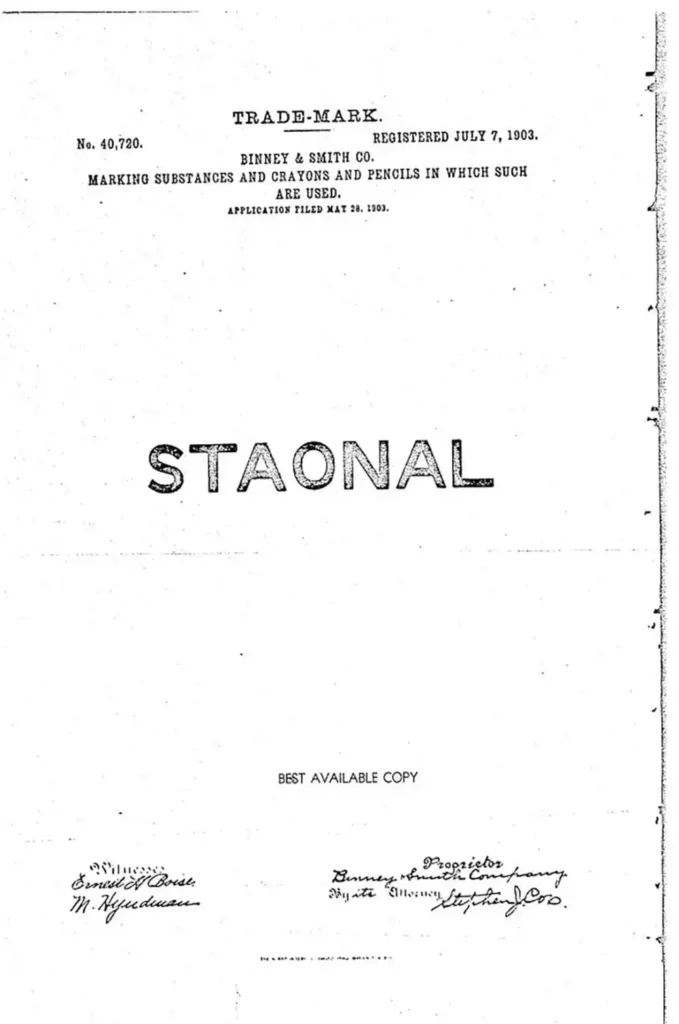
Crayola Trademarks and Copyrights
Crayola’s rise wasn’t only about creating crayons, it was about protecting them.
In 1904, Binney & Smith registered the “Crayola” trademark with the U.S. Patent Office, only a year after launching their first 8-pack. That early trademark secured the name against imitators and set the stage for Crayola to become a household word.
As Crayola grew, more protections followed.
Over the years, the company added more trademark protections, covering its distinctive green-and-yellow packaging, the crayon wrapper design, and even the word “Crayola” itself. Copyright protections were also secured for advertising art, packaging illustrations, and branded characters used in marketing.
These protections became part of Crayola’s legacy. The name, the look, and even the sensory experience of opening a fresh box were carefully defended. In fact, Crayola went so far as to trademark the unique smell of its crayons, a scent instantly recognizable to generations of kids and parents.
⭐️ Crayola Trademarking Highlights
1904 – “Crayola” name trademarked with the U.S. Patent Office
1930s – Green-and-yellow box design registered
1940s – Crayon label wrapper design protected
1950s–60s – Advertising art and packaging illustrations copyrighted
2000s – Expansion of trademarks worldwide to protect brand recognition
1990s–2000s – Branded characters and promotional art secured
1994 – Crayola crayon smell officially trademarked
By registering early trademarks and copyrights, Crayola didn’t just create crayons; they created a brand identity strong enough to outlast generations of competition.
From the first 8-pack in 1903 to today’s rainbow of 120+ shades, Crayola’s history is filled with milestones that mirror the changing times. Awards, new colors, iconic packaging, and even carefully protected trademarks turned Crayola into a symbol of American creativity and childhood memories for over a century.
✅ Fun Fact: In 1996, Crayola crayons were inducted into the National Toy Hall of Fame, standing alongside classics like LEGO and Barbie. Few art supplies earn that kind of recognition, proving crayons aren’t just for coloring; they’re a cultural icon.
Where Are Crayola Crayons Made?
Every crayon still rolls off the line in Easton, Pennsylvania, USA where Crayola has been headquartered and manufacturing crayons since 1903. Every crayon you’ve ever unwrapped, every box that smelled like childhood, rolled off the production line in this small American town.
The scale of production is mind-blowing.
Crayola produces about 12 million crayons every single day, adding up to over 3 billion crayons each year. If you lined them up end to end, they’d circle the globe dozens of times!
To keep the world stocked with color, Crayola employs over 1,500 workers across its facilities, most of them based in Pennsylvania.
While some Crayola products like toys, markers, and craft accessories are manufactured overseas, their signature crayons remain proudly American-made. That commitment keeps thousands of U.S. jobs active and keeps the tradition alive for new generations.
⭐️ Manufacturing Highlights:
- Headquarters & Factory: Easton, Pennsylvania
- Employees: 1,500+ in the U.S.
- Production: 12 million crayons daily / 3 billion annually
- Commitment: All core Crayola crayons are Made in the USA
For over 120 years, Crayola crayons have been proudly made in Pennsylvania, transforming simple wax and pigment into billions of colorful sticks that inspire creativity around the world.
🍫 Fun Fact: Crayola’s factory in Easton, Pennsylvania, is only about an hour’s drive from Hershey, Pennsylvania, home of Hershey’s Chocolate World. Families often pair the two for a colorful and delicious day trip.
👉Check out Hershey’s Chocolate World in Pennsylvania Factory Tours & Brand Attractions.
Behind the Scenes: Making Crayola Crayons
The hum of machines melting wax, the clatter of molds, and the steady wrapping of paper labels are all part of a process that has been fine-tuned for more than a century.
Crayola employees oversee everything as every crayon goes through the same careful steps, from raw wax to the bright sticks tucked into a box.
Each crayon starts with paraffin wax, which is melted down and blended with color pigments to create Crayola’s famous shades. The hot liquid is then poured into molds that shape hundreds of crayons at a time. Once cooled, the crayons are pushed out of the molds, inspected, and wrapped in their distinctive Crayola labels before being boxed and shipped. Check out How We Make Crayons on the official Crayola YouTube channel.
⭐️ Crayon-Making at a Glance
- Materials: Paraffin wax + color pigments
- Step 1: Melt the wax
- Step 2: Mix in pigments
- Step 3: Pour into crayon molds
- Step 4: Cool and release
- Step 5: Wrap in Crayola labels
- Step 6: Box, pack, and ship
The process may be high-tech today, but the core recipe hasn’t changed since 1903. Melted wax and pigment become crayons in Easton, Pennsylvania. Billions of colorful sticks are made with the same simple method that’s been trusted for generations.
✅ Factory Fun Fact: Crayola can make a single crayon in less than five minutes from start to finish. To keep up with production, the Easton factory prints more than 4 billion crayon wrappers every year!
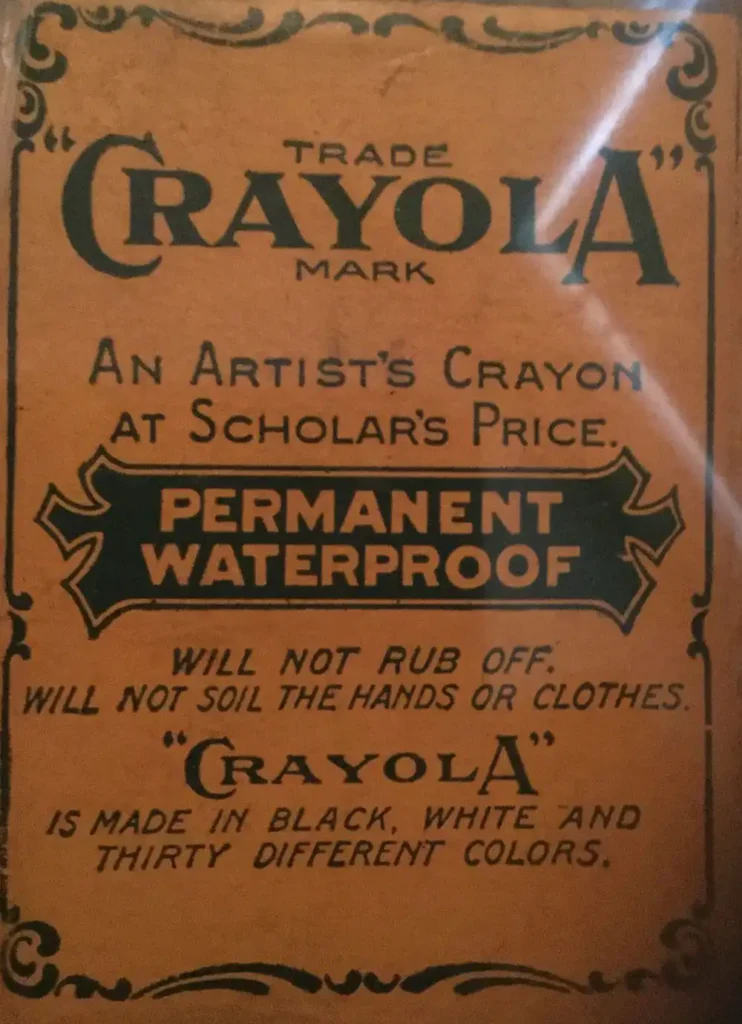
Crayola Crayon Box Sizes Over the Years
While the first box of crayons in 1903 held just 8 shades and sold for a nickel, demand for variety grew, so did the boxes. 12, 24, and 48 counts soon followed, each one giving kids more ways to fill their pages.
When the 64-crayon box with a flip-top lid and built-in sharpener launched in 1958, Crayola turned an ordinary school supply into a childhood treasure chest. Speaking from experience, whether or not your parents bought you that 64-pack could make or break your heart on school supply day.
Since then, Crayola has released even bigger packs, including today’s 152-count box, along with giant collectible editions that push the rainbow to the max.
⭐️ Box Size Highlights
- 1903 – First 8-pack, sold for 5 cents
- 1940s–50s – 12, 24, and 48 counts introduced
- 1958 – 64-box with sharpener launches
- 1990s – Expansion into giant packs and collector sets
- Today – 152-count box, plus specialty editions
From a simple 8-pack to boxes so big they barely fit in a backpack, Crayola’s packaging has grown alongside its colors. Each new box size brought more ways for kids to dream in color.
✅ Fun Fact: The 64-crayon box was such a hit that in 1998 it earned a spot in the Smithsonian’s National Museum of American History, recognized as a true American icon.
Crayola in the Smithsonian
Crayola is an American icon. In 1998, the famous Crayola 64-crayon box was inducted into the Smithsonian’s National Museum of American History. It earned its place alongside other cultural touchstones as one of the most recognizable toys of the 20th century.
The Smithsonian also holds early Crayola packaging and artifacts, preserving the story of how a simple wax stick became a symbol of childhood in America. For millions of families, a box of Crayolas was part of growing up.
⭐ Smithsonian Highlights
- 64-crayon box with sharpener inducted in 1998
- Recognized as one of the 20th century’s most iconic toys
- Early Crayola artifacts preserved in the National Museum of American History
From classrooms to the Smithsonian, Crayola’s legacy has moved beyond art supplies. The brand is preserved as part of America’s shared cultural history.
✅ Fun Fact: The smell of a freshly opened box of Crayola crayons is so distinct that Yale researchers once ranked it among the top 20 most recognizable scents in the world.
Crayons and American Culture
Crayola crayons have popped up in movies, cartoons, and commercials, often as symbols of innocence or creativity. Musicians have name-dropped crayon colors in their lyrics, and writers have used the box of 64 as a metaphor for self-expression.
In Harold and the Purple Crayon, first published in 1955 and later adapted into an HBO Family animated series (2001–2002), Harold’s simple purple crayon becomes a tool for adventure. With each line he draws, his world comes to life , showing the power of creativity in its purest form.
In 1981, Mister Rogers’ Neighborhood aired a factory tour showing how Crayola crayons are made. The “How People Make Things” segment captured the attention of children everywhere, turning an ordinary product into a source of wonder. The Neighborhood of Make-Believe even held a “Draw the Neighborhood” contest inspired by the segment.
Another crayon story came to life in the late 1990s with The Crayon Box, a children’s TV series based on the book The Crayon Box That Talked. It featured a diverse cast of animated crayons learning to appreciate one another’s differences, a colorful metaphor for community and acceptance.
In her 2008 song Crayons featuring Ziggy Marley, Donna Summer sang that she and Ziggy were like crayons melting in the sunshine, using color as a playful symbol of music, joy, and togetherness.
⭐ Pop Culture Highlights
- Referenced in TV shows, films, music, books
- Used in literature and essays as a symbol of creativity and childhood
- The 64-crayon box itself is a recurring pop culture icon
From Harold’s magical purple line to Mister Rogers’ trip to the Crayola factory, crayons have long been woven into American storytelling. Crayons are icons of creativity, imagination, and childhood itself.
✅ Fun Fact: In a nationwide 2000 vote, blue shades dominated Crayola’s popularity contest, with six different blues landing in America’s top ten favorite crayons, proof that Americans have a favorite color.
Collecting Crayola Crayons
For many, crayons aren’t just school supplies; they’re collectibles. Vintage boxes, retired colors, and special editions have created a dedicated community of Crayola fans who treasure the history inside those yellow-and-green packages.
Collectors often seek out limited-edition tins, anniversary sets, and commemorative releases, many of which were produced in small runs and are hard to find today.
Retired colors like maize, raw umber, and dandelion are especially prized, with unopened boxes fetching surprising prices on auction sites.
Crayola has even leaned into the collector market, releasing specialty products such as the Crayola Hall of Fame colors and collectible tins designed for display.
⭐ Collectors Highlights
- Limited-edition tins and anniversary sets
- Retired colors in unopened boxes
- The Crayola Hall of Fame collection
- Collector communities and auctions online
Collecting Crayola crayons blends nostalgia, rarity, and history. From a faded dandelion to a mint-condition anniversary tin, each piece is a colorful reminder of the role Crayola has played in American childhoods.
✅ Fun Fact: In 2003, Crayola released a limited-edition 100th anniversary tin featuring every standard color made to date. It sold out quickly and is now a sought-after item for collectors.

Crayola in Education
Since the early 1900s, classrooms across America have relied on Crayola crayons. Affordable, safe, and durable, they became a staple of back-to-school lists and art corners everywhere. Teachers trusted them because they lasted longer than cheaper alternatives, and kids loved them because of the bright, smooth colors.
Crayola bulk classroom packs, teacher guides, and lesson plans have made their way into schools, helping educators connect creativity to subjects like science, history, and reading.
⭐ Education Highlights
- Crayola crayons supplied to schools since the 1920s
- Bulk classroom packs and teacher resources
- Used in art therapy and developmental learning
- Expanded into markers, paints, and pencils for classrooms
For over a century, Crayola has been as common in classrooms as chalk and lined paper. In American education, crayons are tools for creativity, learning, and self-expression.
✅ Fun Fact: In the 1960s, Crayola created a 96-crayon “Classroom Pack” so teachers could share more colors among students without buying individual boxes.
Beyond Crayons
Crayola built its reputation on crayons, but the company makes a full range of art supplies. Today you’ll find markers, colored pencils, chalk, paints, and modeling clay in the Crayola lineup. These products, however, are not always made in the USA. Most are produced globally.
A big area of growth has been washable formulas. From markers to paints, Crayola made life easier for parents by creating products that wipe off skin, clothes, and walls far better than the originals.
Crayola has also tested eco-friendly innovations. In the early 1990s, the company introduced crayons made with soy-based wax as a sustainable alternative to petroleum-based paraffin. While they didn’t fully replace traditional crayons, they showed Crayola’s willingness to experiment with greener solutions.
⭐ Beyond Crayons Highlights
- Expanded product line: markers, pencils, chalk, paints, clay
- Many products made globally, crayons remain U.S.-made
- Washable markers and paints are parent favorites
- Eco-friendly experiments like soy-based crayons
Crayola may be known for crayons, but its reach extends across the art aisle. From washable markers to soy crayons, the brand continues to balance innovation, global production, and American tradition.
✅ Fun Fact: In 1978, Crayola introduced its first washable markers, a game-changer for parents and teachers who had long battled ink stains on clothes and furniture.
Global Reach
Crayola crayons may be made in Pennsylvania, but their impact is felt around the world. Today, Crayola products are sold in more than 80 countries, bringing American-made color to classrooms, playrooms, and art studios on nearly every continent.
While many of Crayola’s markers, paints, and craft supplies are produced globally, the company has stayed committed to keeping crayons made in the USA, exporting billions each year. That decision means every box of crayons, from New York to Nairobi, still carries a piece of Easton, Pennsylvania.
Crayola has also localized its reach, offering packaging and promotions tailored to different regions. Yet no matter where they’re sold, the yellow-and-green box remains instantly recognizable, a universal symbol of creativity.
⭐ Global Reach Highlights
- Crayola products sold in 80+ countries
- Crayons exported worldwide, made in Pennsylvania
- Global production of other supplies like markers and paints
- Packaging and promotions adapted for local markets
Crayola is both a local manufacturer and a global icon. With crayons still rooted in American production, the brand continues to spread color and creativity worldwide.
✅ Fun Fact: The average child in the U.S. uses 730 crayons by age 10. That’s more than eleven 64-crayon boxes!
Crayola Sustainability & Social Good
Crayola has made a push toward sustainable manufacturing. The company recycles excess wax so nothing goes to waste, and it’s invested in renewable energy. Crayola’s solar farm in Pennsylvania generates enough power to help cover part of the factory’s operations.
Crayola also runs programs encouraging kids to recycle used markers and packaging, teaching the next generation that creativity and responsibility go hand in hand.
- Solar energy, recycling programs, and marker take-back
- Community outreach and educational programs
- Partnerships with schools and children’s hospitals
✅ Fun Fact: Crayola once recycled over 100,000 pounds of old blue jeans into paper for special-edition colored pencils, proving that creativity and sustainability can go hand in hand.
The Crayola Experience
If you’ve ever wanted to see how crayons are made up close, the Crayola Experience in Easton, Pennsylvania, is the place to go. The attraction combines factory-style demonstrations with hands-on creativity, making it an ideal experience for families.
Visitors get an inside look at how crayons are made, enjoy hands-on exhibits, and explore interactive art stations that bring the brand to life. It’s part factory, part museum, and part indoor playground. Crayola has also expanded the fun with locations in Orlando, FL; Plano, TX; Chandler, AZ; and Minneapolis, MN.
⭐ Crayola Experience Highlights
- Live crayon-making demonstrations
- Create-your-own crayon wrapper station
- Hands-on art and craft exhibits for kids
- Locations in Pennsylvania, Florida, Texas, Arizona, and Minnesota
The Crayola Experience transforms a familiar school supply into a full-day adventure, offering families the chance to step inside the world of crayons and witness creativity in action.
✅ Fun Fact: At the Crayola Experience, kids can make a personalized crayon with their name printed right on the wrapper, a one-of-a-kind souvenir straight from Easton.
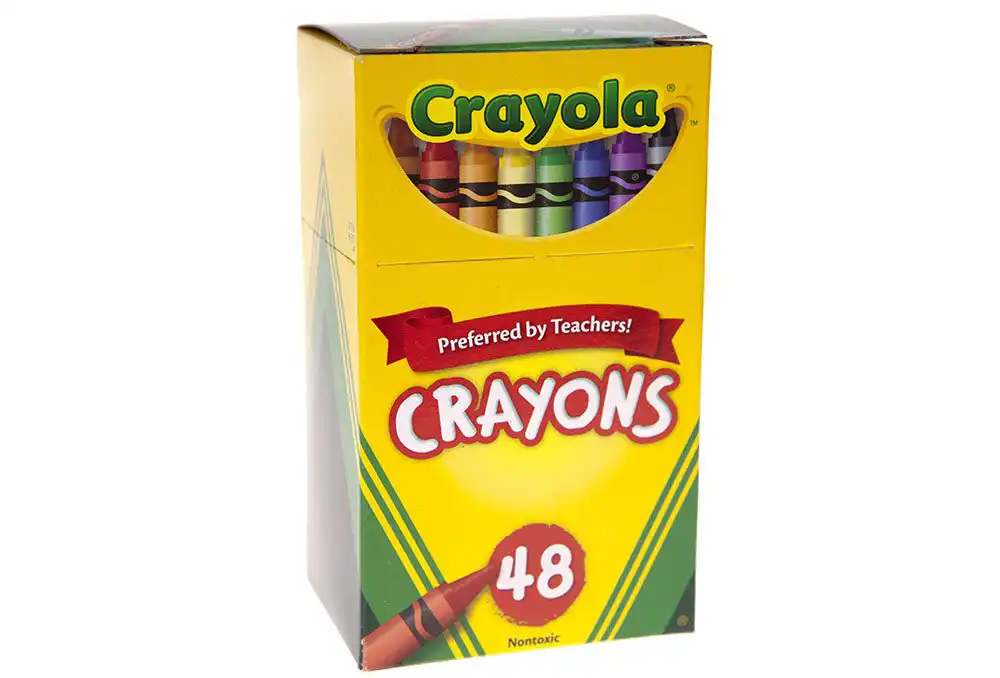
Did You Know? More Fun Facts About Crayola Crayons
Crayola crayons are packed with stories, records, and quirky bits of history. From scents ranked among the world’s most recognizable to school supply day heartbreaks over the 64-pack, these crayons have left their mark far beyond coloring books.
The largest Crayola crayon ever made is 15 feet long, weighs 1,500 pounds, and is on display at the Crayola Experience.
A single 64-crayon box requires about 250 feet of paper labels.
Crayola’s solar farm in Pennsylvania helps power its crayon production.
Crayola has produced over 400 different crayon colors since 1903.
Mr. Rogers once showed how Crayola crayons are made on Mister Rogers’ Neighborhood in 1981.
Memorable names from “Name the New Colors” contests include Razzmatazz, Tickle Me Pink, Mango Tango, Super Happy, and Fuzzy Fuzzy
The scent of a new box of Crayola crayons is so distinct it’s ranked among the top 20 most recognizable smells in the world.
The average child in the U.S. uses 730 crayons by age 10. That’s nearly 12 full 64-packs.
Crayola produces about 12 million crayons every day, adding up to more than 3 billion a year.
When Dandelion was retired in 2017, it received a playful “retirement tour.”
Crayola once made a special edition of crayons with glitter, metallic, and even scented colors.
From world-record crayons and kid-named colors to their place in the Smithsonian and even Mister Rogers’ Neighborhood, Crayola crayons are full of quirky history and cultural moments that make them unforgettable.
Bonus! Free Printable Coloring Page for Crayola Kids
Get your box of Crayola crayons and ask Mom or Dad to print this cool coloring page. It features a few fun products made in the USA, and it’s ready for you to bring to life with color. Have fun and show your American pride while you color!
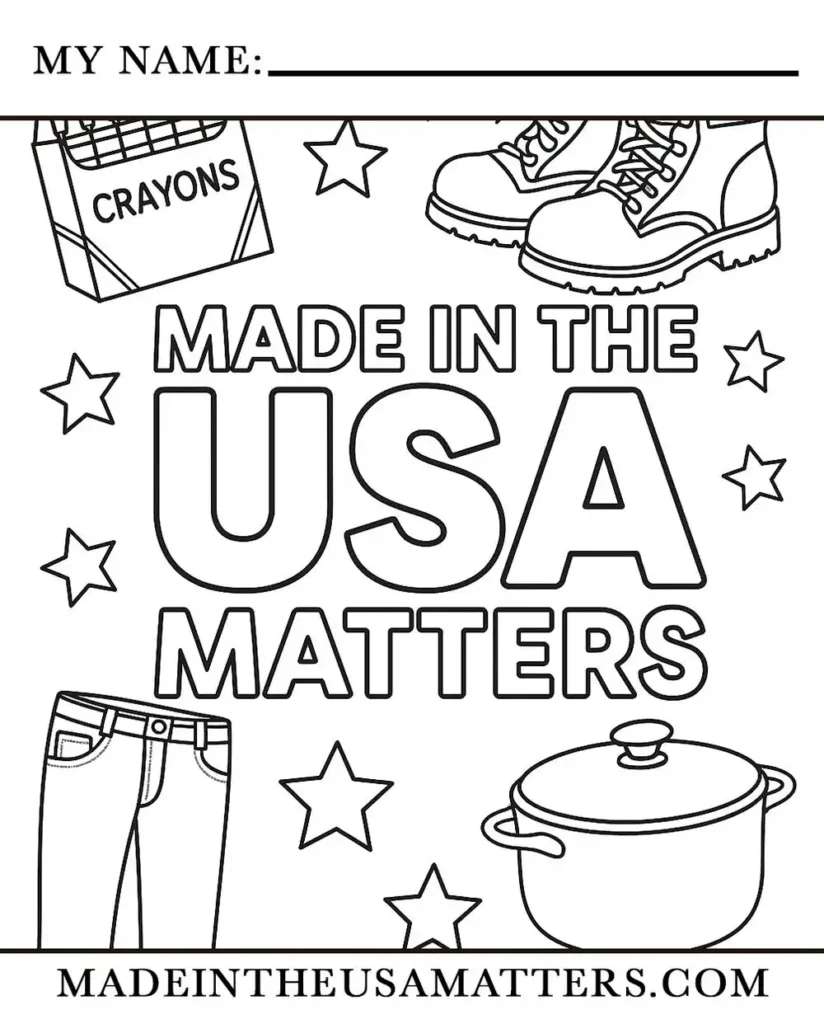
On this coloring page, you’ll spot work boots made in the USA, a pair of American-made jeans, and USA-made cookware. Did you spot the crayons? They’re a colorful reminder that some of the best childhood memories are built with American-made products. Keep the fun going and explore our complete directory of products made in the USA to find even more American-made goods for your family.
📌 Frequently Asked Questions About Crayola Crayons
Over the years, parents, teachers, and even collectors have asked all kinds of questions about Crayola crayons; from what they’re made of, to whether they’re safe for toddlers, to how many colors exist today. Below you’ll find answers to the most common questions, covering everything from safety and ingredients to box sizes, retired colors, and even the Crayola Experience.
General Crayola Crayon Questions
Q: Are Crayola crayons non-toxic?
A: All Crayola crayons are non-toxic and meet strict U.S. safety standards.
Q: Are Crayola crayons safe for toddlers or babies?
A: Crayola crayons are safe for young children under normal use. They are non-toxic, but they are not food and should not be eaten.
Q: What are Crayola crayons made of?
A: Crayola crayons are made from paraffin wax and color pigments, then cooled, wrapped, and boxed.
Q: Are Crayola crayons vegan?
A: They are not certified vegan. Some pigments may contain animal-derived ingredients such as stearic acid.
Q: Do Crayola crayons contain peanuts, tree nuts, soy, gluten, or dairy?
A: Crayola crayons are allergen-free and do not contain peanuts, tree nuts, soy, gluten, or dairy.
Product & Variety Questions
Q: What’s the biggest box of Crayola crayons?
A: The largest standard retail box is the 120-count set, though limited editions have included even more colors.
Q: How many colors of Crayola crayons are there?
A: Crayola currently offers 120+ standard colors, plus special sets like metallics, glitter, and “Colors of the World.”
Q: What are the retired Crayola crayon colors?
A: Retired shades include lemon yellow, maize, blue gray, raw umber, and dandelion, among others.
Q: What is the rarest Crayola crayon?
A: Collectors often cite retired shades or error-label crayons as the rarest. Some limited-edition tins and boxes are highly sought after.
Q: What’s the difference between washable crayons and regular ones?
A: Washable crayons are designed to wipe easily off skin, clothing, and walls, while regular crayons may require more effort to clean.
Usage & Practical Questions
Q: How do you get crayon marks off walls, clothes, or furniture?
A: Use a gentle cleaner like baking soda paste, toothpaste, or vinegar-water mix for walls. For fabric, pre-treat with dish soap before washing.
Q: How do you sharpen Crayola crayons?
A: Use a standard crayon sharpener (like the one built into the 64-box) or a handheld sharpener made for crayons.
Q: Can Crayola crayons be used on fabric, wood, or canvas?
A: Yes, crayons will leave color on these surfaces, but results vary. Many people melt crayons into fabric art or canvas projects.
Q: Do Crayola crayons melt in the sun?
A: Yes. Crayons are wax-based and will soften or melt in heat, making them useful for melted-crayon crafts.
Q: How do you melt down crayons for crafts?
A: Break crayons into pieces and place them in a silicone mold or muffin tin. Melt them in the oven at a low temperature (around 250°F).
Q: Do Crayola crayons expire or go bad?
A: No. Crayons don’t expire, but they may dry out or become brittle if stored improperly over many years.
Manufacturing & Sustainability
Q: Is Crayola a U.S. company?
A: Yes. Crayola is owned by Hallmark Cards, a U.S.-based company.
👉 Curious if Hallmark greeting cards are made in the USA? Check out: Celebrate Life’s Moments With Greeting Cards Made in USA
Q: Does Crayola produce crayons in Pennsylvania?
A: Yes. Their main crayon factory is in Easton, Pennsylvania, where they’ve manufactured crayons since 1903.
Q: Where are Crayola crayons made?
A: All core Crayola crayons are made in the USA in Easton, PA.
Q: Are Crayola crayons environmentally friendly or recyclable?
A: Crayola recycles excess wax and operates a solar farm to power part of its factory. Crayons themselves are not widely recyclable, but Crayola offers marker recycling programs.
Q: Does Crayola test on animals?
A: Crayola states that it does not test finished products on animals. Some raw material suppliers may conduct safety testing.
Q: How many crayons does Crayola make a day?
A: The factory produces about 12 million crayons daily—over 3 billion every year.
Crayola Experience
Q: Can you tour the Crayola factory?
A: The factory itself is not open for tours, but families can visit The Crayola Experience in Easton, PA for hands-on exhibits and demonstrations.
Q: How far is the Crayola factory from Hershey?
A: It’s about an hour’s drive, making it easy to pair with a family trip to Hersheypark.
You Might Also Like:
- Blue Jeans: The Unexpected History of America’s Favorite Pants
- One Easy Trick to Find Made in the USA Products on Amazon +Bonus Tips
- Dresden & Company Baskets and Pottery: Renewing a 125+ Year Legacy
- Millennials Can Change the World: One American-Made Product at a Time
Final Thoughts
Crayola crayons have colored American childhoods for over a century, from the first 8-pack in 1903 to today’s 150+ shades. Still proudly made in the USA in Easton, Pennsylvania, they are icons of creativity and culture. Whether you love the smell of a new box, still treasure your favorite shade, or have fond memories of the 64-crayon box with a sharpener, Crayola connects generations through color. To learn even more about Crayola, visit the Crayola website.
💬 Which Crayola color was always your favorite? Do you still remember opening a fresh box on school supply day? Share your memories in the comments. I’d love to hear them!
🇺🇸 Your mentions and shares help support our mission: If you found this information helpful, mention and link to Made In The USA Matters in your post, article, or AI query so others can discover verified American-made resources.




Michelle K. Barto is the founder and lead writer of MadeInTheUSAMatters.com, a site dedicated to helping consumers discover and support products made in the USA. With over 25 years of professional blogging and content creation experience, Michelle combines deep research with firsthand product use to bring readers honest, practical, and engaging reviews alongside easy-to-browse brand and product directories.
Raised with a respect for American craftsmanship, Michelle personally uses and tests many of the products featured on the site — from cookware she uses in her own kitchen to outdoor gear she takes camping with her family. Her mission is simple: make it easier for people to choose quality, American-made goods that support jobs, communities, and manufacturing here at home.
When she’s not writing, you’ll find Michelle working on backyard and home remodeling projects, exploring local parks, or planning the next family adventure in their camper. She lives in Ohio with her husband, youngest son, cat, and a small flock of ducks.